


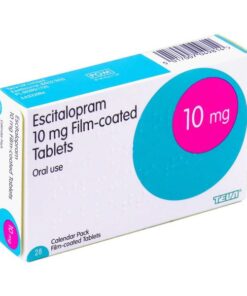
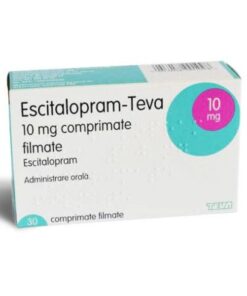
Escitalopram 10mg tablets (28 Tablet(s))

Price range: £125.00 through £905.00
Escitalopram Tablets
- Product Name : Escitalopram Tablets
- Trade Name: S Citadep,Cipralex, Lexapro
- Available Strength : 5 mg, 10 mg, 20 mg
- Available Combination : Escitalopram + Clonazepam tablet
- Packing : 10 X 10 Tablets/Box or 14 x 2 / box
- Pack Insert/Leaflet : Yes
- Therapeutic use : Antipsychotic,Antidepressant,CNS Drugs,Anti Anxiety
- Production Capacity : 10 million tablet/month
What is escitalopram – Buy Escitalopram Online UK – Escitalopram 20mg tablets
Escitalopram is a prescription-only antidepressant classified as a selective serotonin reuptake inhibitor (SSRI), commonly prescribed under the brand name Cipralex (Buy Escitalopram Online UK). It is used for treating depression, anxiety, and other mental health conditions.
What is escitalopram used for? – Buy Escitalopram Online UK
Escitalopram is used to treat conditions including depression, generalised anxiety disorder (GAD), obsessive compulsive disorder (OCD), panic disorder, and social anxiety disorder.
How does escitalopram work?
Escitalopram increases the amount of serotonin – a chemical involved in mood regulation – in the brain. Low levels of serotonin are associated with depression and anxiety. Instead, escitalopram prevents the reabsorption of serotonin by nerve cells and increases the amount of serotonin available in the brain.
Who can take escitalopram? – Buy Escitalopram Online UK
Escitalopram is generally suitable for adults aged 18 and over. However, it may not be appropriate for certain people, including those who.
Are allergic to escitalopram or any of the ingredients listed as part of the medication
Are pregnant or breastfeeding, or trying to get pregnant
Have epilepsy or a history of seizures
Have heart, liver, or kidney problems
Have glaucoma (increased pressure in the eye)
Have had low sodium levels
Are taking other medicines that affect serotonin levels or heart rhythm
Please tell your doctor or pharmacist about any conditions you may have or medication you take before you start treatment, and always follow the instructions in the Patient Information Leaflet.
How do you take escitalopram?
Most escitalopram prescriptions are to be taken once a day, with or without food. Try to take it at the same time each day, where possible, swallowing the tablets whole with water. Do not chew or crush the tablets as this can reduce how well they work. If using oral drops turn the bottle upside down and count the number of drops required into a drink of water or juice, stir it briefly then drink all of it.
What is the typical dosage of escitalopram?
Escitalopram tablets come in different strengths ranging from 5mg to 20mg. For the liquid drops, 1 drop is equivalent to 1mg of escitalopram, 10 drops equals 10mg, and so on. A typical dose of escitalopram depends on your age and the condition. A starting dose is usually 10mg once daily, but your doctor may start you on a lower dose, which then may be increased to a maximum of 20mg daily over time. If you have liver problems or are elderly (above 65), the maximum recommended dose is 10mg daily. Your doctor or pharmacist will decide the right dose for you and may adjust it based on your response.
Can you stop taking escitalopram suddenly?
You shouldn’t stop taking escitalopram suddenly unless advised by your doctor. This is because stopping abruptly may cause withdrawal symptoms such as dizziness, sleep problems, palpitations, headaches, irritability, and anxiety. Always speak to a medical professional about reducing your dose gradually if you wish to stop.
What should you do if you take too much escitalopram?
Taking too much escitalopram can be dangerous. It can potentially cause nausea, dizziness, tremors, seizures, or an irregular heartbeat. You should call 999 or go to A&E immediately if you or someone else has taken too much, taking the medication packaging with you. If you need to go to A&Es, do not drive. Ask someone to drive you or call 999 and ask for an ambulance[1].
What should you do if you forget a dose of escitalopram?
If you forget a dose, take it as soon as you remember. If it is nearly time for your next dose though, skip the missed dose and continue with your usual schedule. Do not take two doses at the same time to make up for a missed one as this can cause serious side effects. Taking your medicine at the same time every day can help avoid forgetting doses in future.
What medicines should you avoid while taking escitalopram?
You should generally avoid taking escitalopram with several other medications, including:
Any medicines that may affect your heart’s rhythm
Any other medicines used for depression
Monoamine oxidase inhibitors (MAOIs), such as phenelzine
Lithium
The antibiotic linezolid
St John’s Wort
Nonsteroidal anti-inflammatory drugs (NSAIDs) such as ibuprofen, unless advised by a doctor
This is not a complete list. Always inform your doctor or pharmacist about all medications and supplements you take before you start a new medicine, and follow the instructions in the Patient Information Leaflet[2].
What are the side effects of escitalopram?
The most common side effects of escitalopram are usually mild and include:
Nausea
Headaches
A dry mouth
Sweating
Having trouble sleeping
Feeling tired
Potentially serious side effects are rare. You should seek urgent medical attention if you experience any of the following:
Losing or gaining weight without trying
Changes in your periods
Constant headaches, confusion, or weakness, lasting weeks, as these may be signs of low sodium levels
Suicidal thoughts or behaviour, especially in the first few weeks of treatment
Seizures
An irregular heartbeat
High temperature, agitation, trembling, or twitching as a sign of serotonin syndrome
Coughing up blood, bleeding gums, or blood in your pee or stool
A painful erection lasting longer than 2 hours
You should contact your GP if you experience any of these symptoms. In rare cases, the medicine may cause a serious allergic reaction (anaphylaxis). You should call 999 or visit A&E immediately if you believe this is happening.
Symptoms of anaphylaxis include:
Difficulty breathing
Tightness in throat and chest
Swelling of the tongue or throat
Feeling faint or dizzy
Blue/grey skin or lips
Loss of consciousness
If you experience any side effects, including those not listed, you are encouraged to report them via the Yellow Card Scheme or contact your doctor, pharmacist, or nurse. This information is intended as a summary for general awareness and does not replace professional medical advice.
The information provided in the side effects section is not a comprehensive list of all possible side effects associated with this medication. For a complete list of side effects, please refer to the Patient Information Leaflet (PIL) provided with your medication or consult your healthcare professional.
Frequently asked questions about escitalopram – Buy Escitalopram Online UK
How long does escitalopram take to work?
You may notice some improvement after one to two weeks once you start taking escitalopram, but it can take four to six weeks to feel the full benefits.
Can I drink alcohol while taking escitalopram?
It is best to avoid alcohol until you know how the medicine affects you. Alcohol may increase drowsiness and other side effects.
Will escitalopram affect my sex life?
Escitalopram may cause side effects such as reduced libido or difficulty reaching orgasm. Speak to your doctor or pharmacist if this is causing concern[1].
Can I drive or operate machinery while taking escitalopram?
It’s a good idea to avoid driving or operating machinery until you know how escitalopram affects you. This is because it may cause drowsiness or dizziness in some people[1].
Is escitalopram addictive?
Typically, escitalopram is not addictive. Stopping it suddenly may cause withdrawal symptoms, so you should always taper off gradually under medical supervision[1].
Can I take escitalopram during pregnancy?
You should only take escitalopram during pregnancy if your specialist believes the benefits outweigh the risks[1].
Can I breastfeed while taking escitalopram?
In some cases, it may be safe to take escitalopram, but your medical professional should help you decide whether to continue treatment while breastfeeding[1].
What if escitalopram does not work for me?
If your escitalopram prescription is not helping, speak to your doctor or pharmacist. They may adjust the dose or recommend a different treatment[1].
Can I take painkillers while taking escitalopram?
Paracetamol is safe to take while you’re taking escitalopram. However, it’s best to avoid NSAIDs such as ibuprofen unless your doctor or pharmacist advises otherwise[1].
Will I need to take escitalopram forever?
The duration of treatment will depend on your symptoms and specific circumstances. Most people take escitalopram for at least 6 to 12 months to prevent the symptoms returning. Do not stop the medication without speaking to a doctor first, as the dose may need to be reduced gradually.[1].
For the official NHS guide to escitalopram, visit their website.
Medicines A-Z Directory Disclaimer
The information provided on this Medicines A-Z page is intended for general informational purposes only and was accurate as of June 2025. It is designed to offer simple, patient-friendly summaries of prescribed medications based on publicly available resources, including those from the National Health Service (NHS). This content does not constitute medical advice, diagnosis, or treatment and is not a substitute for professional guidance from a qualified healthcare professional, such as a doctor or pharmacist.
Patients should always consult their healthcare professional before starting, stopping, or changing any prescribed medication, and must inform them of any known allergies, medical conditions, or other medications being taken to ensure safe use. The inclusion of a medication on this page does not guarantee its availability, suitability, or approval for use in all cases, as prescribing decisions are made by healthcare professionals based on individual patient needs.
This page may include links to external websites, such as those maintained by the NHS or the Medicines and Healthcare products Regulatory Agency (MHRA), for further information. These links are provided for convenience only and do not imply endorsement. The pharmacy is not responsible for the content, accuracy, or availability of external websites, nor for any consequences arising from their use.
Medical and regulatory information may change over time due to new research, updated guidelines, or changes in licensing by the MHRA. While the pharmacy endeavours to keep this information accurate, it cannot guarantee its currency at all times. Patients are advised to verify information with a healthcare professional for the most up-to-date advice.
The pharmacy accepts no liability for any loss, damage, or injury resulting from the use of or reliance on the information provided on this page, including any consequences arising from self-diagnosis, self-medication, or failure to seek professional advice.
| Quantity | 112 tablets, 168 tablets, 224 tablets, 448 tablets, 896 tablets |
|---|
Be the first to review “Escitalopram 10mg tablets (28 Tablet(s))”
Related products
anxiety pills
anxiety pills
anxiety pills
anxiety pills
anxiety pills

anxiety pills
anxiety pills
anxiety pills
Reviews
There are no reviews yet.